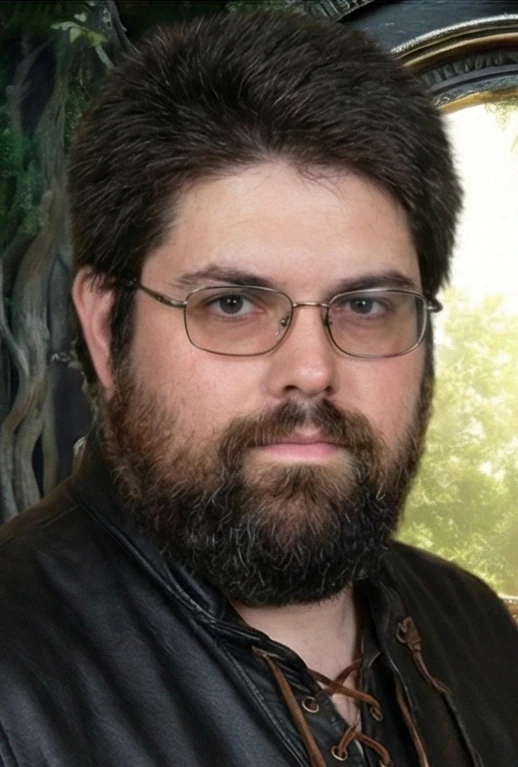
I’m Matthew Hunter, a programmer, sysadmin, and CISSP security officer. I’ve been building software and tinkering with Linux since the late 90s. This site is home to my projects, writings, and occasional musings on gaming, technology, and life.
Assassin's Quest
By Matthew Hunter
| Apr 22, 2004
|
Fans of Robin Hobb’s Assassin series already know that they are in for an emotional roller coaster, but Assassin’s Quest in particular is very difficult to read. All of the supporting characters that Fitz loved and trusted have been wrested away from him by one manner of disaster or another. Those whose lives have included periods of major depression will recognize the symptoms and the self-destructive impulses. This is not a book for the emotionally fragile, but then, if you are still reading the series by this point it should be obvious. In a way, the book is noteworthy for that quality in itself: rarely does an author bring their main character so low and portray the results with such unsympathetic clarity.
Shadow Games
Shadow Games is the first of the Books of the South, the second part of the Chronicles of the Black Company. Following the events of The White Rose
and roughly contemporaneous with The Silver Spike
, Shadow Games follows Croaker and the Black Company on the first steps of their quest to return to their origins… the almost-mythical city of Khatovar, across the equator and nearly seven thousand miles of marching from the Lady’s tower at Charm.
Jhereg
By Matthew Hunter
| Apr 18, 2004
|
The best way to understand the world of Vlad Taltos, assassin, is to begin with the knowledge that he works almost exclusively for the elvish mafia. Yes, there are elves in the mafia. There’s also magical pollution, talking lizards, and lots of good swashbuckling fun.
The Wilding
By Matthew Hunter
| Apr 16, 2004
|
I was first introduced to CS Friedman’s work with the Coldfire Trilogy, an excellent exploration of the consequences of introducing humans into a world where magic is shaped by belief – and thus gives life to our worst nightmares. I quickly located her other extant works, The Madness Season (with which I was similarly delighted) and In Conquest Born… which was a story with potential, but which ultimately disappointed me.
Firefly
By Matthew Hunter
| Apr 14, 2004
|
Firefly is a TV series that ran for a single short season (12 episodes) before being canceled. The driving force behind it’s creation was Joss Whedon, and it’s received rave reviews from lots of libertarian types. As such, I thought I’d give it a try.
The series is set in the far future, focusing on the Firefly-class spacecraft Serenity and it’s crew of criminals, smugglers, and generally ornery types. One of the recurring villians is the Alliance, which did some conquering in the backstory and in the series present plays the role of overbearing, aggressive government. If that wasn’t enough to ensure a boycott from the politically-correct crowd, one of the recurring characters is a prostitute and the leading character casually shoots a cop during one of the early episodes.
Burnt Offerings
In Burnt Offerings some of the eggs laid in Circus of the Damned
end up coming home to roost. Specifically, the vampire “Council” is visiting in order to investigate Jean-Claude’s intentions following the death of Mr. Oliver. Normally, when you kill a member of the vampire council, you assume his seat. But Jean-CLaude didn’t kill Oliver; that honor belongs to Anita. The only problem is, Jean-CLaude isn’t a strong enough vampire to hold the council seat – and if they find out Anita did the killing, she’ll be next on the menu.
The Magician's Guild
By Matthew Hunter
| Apr 10, 2004
|
The Magician’s Guild by Trudi Canavan is a fantasy novel built around a very common premise, but presented with uncommon skill. Consider a world wherein the practice of magic is dominated by a guild that restricts training for magery to those citizens of the upper classes, allowing effortless oppression of the lower classes. Inevitably, someone from a less distinguished social class discovers a talent for magic, and finds her life irreversibly changed. The basic plotline has been done in hundreds of variations, but rarely with the skillful painting of characters and interrelated plots that can be found here.
Triplanetary
The first volume in the Chronicles of the Lensmen, Triplanetary brings a tedious 6-chapter introduction to the universe of the Lensmen before focusing on the intricacies of the story itself… the story of a time before the Lens, and humanity’s first successful encounters with the agents of Eddore. There’s a lot of science, a lot of heroic secret-agent-scientists, and a lot of interstellar conflict with impressive technobabble. Clearly, this is where space opera was born.
Synners
By Matthew Hunter
| Apr 6, 2004
|
This 1990’s cyberpunk story is a victim of time and history. When originally published, nobody really knew what the internet would look like, and people could make up whatever they wanted about humans merging with machines and it would seem at least plausible. Twenty-three years later, people are pretty sure what the Internet looks like and it’s not what you find in Synners. That doesn’t make it any less interesting to consider the implications of merging the human mind with computer-augmented virtual reality.
Kindred the Embraced
By Matthew Hunter
| Apr 4, 2004
|
Kindred: The Embraced is something I think was fairly unique in its time… a television series (or, arguably, soap opera) based on a roleplaying game. Specifically, based on White Wolf’s Storyteller system, the first game in which was Vampire: The Masquerade. As you might expect from such a humble beginning, this series wasn’t exactly the best thing on TV. Even so, it wasn’t awful.
The series lasted for 6 episodes and was not renewed. It did well enough to be issued on tape, and then reissued on DVD a few years later. I suspect most people buying the tapes and DVDs are people who like the roleplaying game, rather than people who watched the show.